Brand-Safe AI Avatar Video: Best Practices for Protecting Your Brand While Scaling Content
Learn how to use AI avatars without damaging your brand. Practical best practices for creating brand-safe AI avatar videos that maintain trust and quality at scale.
AI avatars promise faster and cheaper video production. But speed means nothing if your audience does not trust the content. Or worse, if it damages your brand.
You need video content at scale. AI avatars seem like the perfect answer. The problem? Most teams skip the strategy and jump straight to production. That leads to generic avatars, off-brand messaging, and videos that look like shortcuts.
This guide shows you how to use AI avatar video without looking cheap or inauthentic. You will learn what to define before you start, where mistakes happen, and how to protect your brand while scaling content production.
Key Takeaways
Brand safety first: AI avatars work when you plan strategically with proper oversight, not when you rush to produce content quickly.
Biggest risks: Using stock avatars that competitors use, skipping brand guidelines, and choosing speed over consistency will hurt your brand.
Define upfront: Set your avatar strategy with visual identity, use cases, and approval workflows before production begins.
Oversight matters: Customer-facing content like ads and testimonials needs more creative review than internal training videos.
Production tools: AI avatars deliver results when treated as production tools within a brand-first creative process, not as replacements for strategy.
Custom wins: Custom avatars aligned with your target audience and brand identity outperform generic stock options every time.
Why Brand Safety Matters More Than Speed When Using AI Avatars
AI avatar tools sell you on speed. Create videos in minutes. Cut production costs by 80%. Scale content overnight.
But here is what they do not tell you. Your audience can spot a cheap AI video immediately. And when they do, they stop trusting your brand.
Speed matters. But trust matters more. Lose trust and you lose customers.
What "Brand-Safe" Actually Means in AI Avatar Video Production
Brand safety goes beyond legal compliance. It is not just about avoiding copyright issues or following regulations.
Real brand safety means your AI avatar videos match your brand identity, sound like your brand voice, and feel right to your target audience.
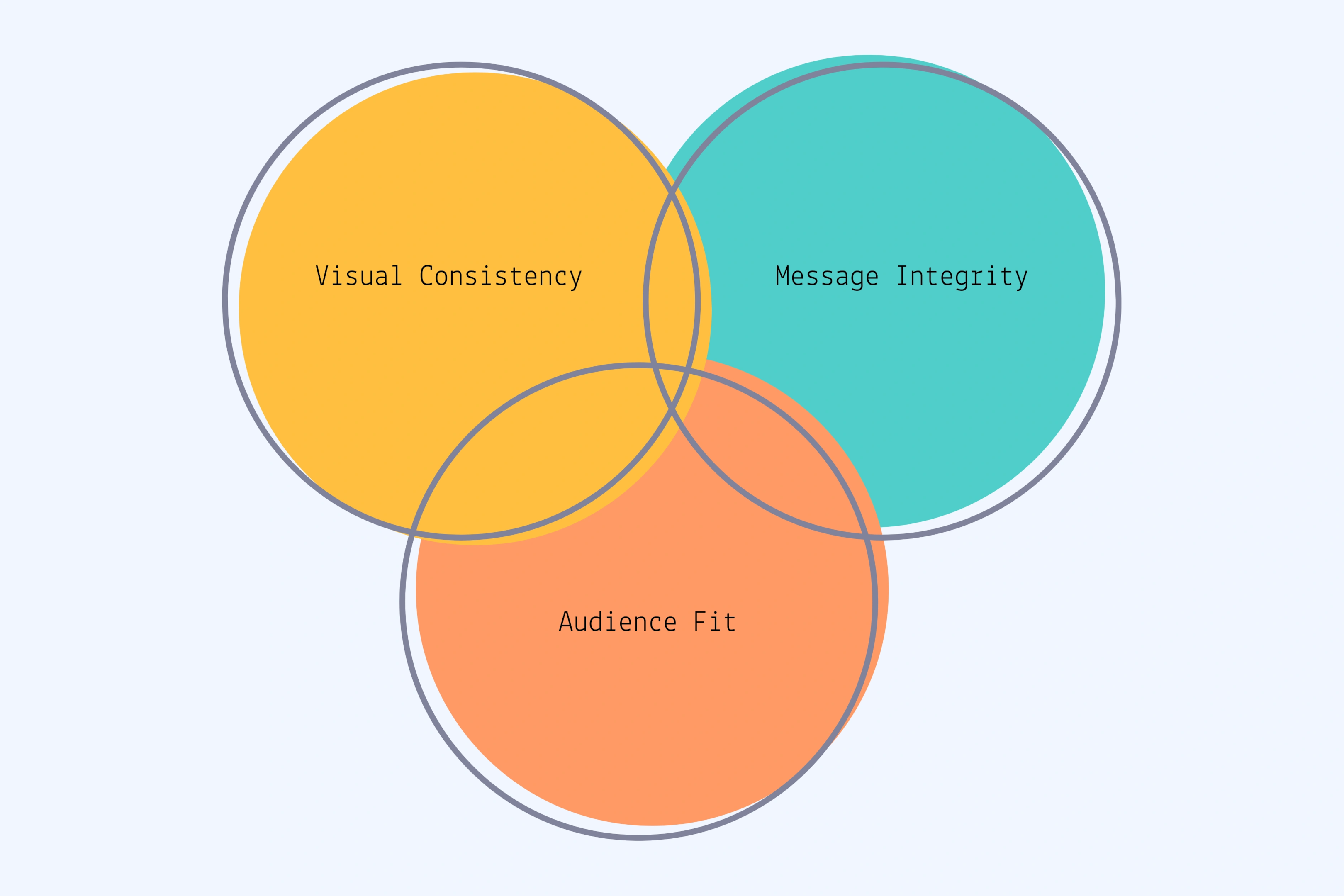
Three pillars of brand-safe AI video:
Visual consistency: Your avatar should match your brand's visual style and quality standards. The same look, the same polish, the same attention to detail you apply to all your marketing content.
Message integrity: The delivery must feel authentic to your brand voice. If your brand is casual and friendly, a stiff corporate avatar breaks trust. If you are professional and technical, an overly animated avatar feels wrong.
Audience fit: Your target audience decides if AI video works. Some audiences accept AI avatars in product demos and training videos. Others expect real people in testimonials and brand storytelling.
The Difference Between "AI-Generated" and "Brand-Aligned"
Most stock avatars fail brand safety tests. They are generic. Overused. No connection to your brand assets or brand guidelines.
You can create a technically functional AI video in minutes. The avatar moves. The voice sounds clear. The video plays without errors.
But functional does not mean brand-aligned.
A video that truly represents your brand requires more. Custom avatar design. Script review. Attention to facial expressions and visual style. Alignment with your brand's message and marketing strategy.
AI-generated is easy. Brand-aligned takes planning. One protects your brand. The other just fills a content calendar.
Common Brand Safety Mistakes Teams Make with AI Avatars
Marketing teams rush into AI video creation without a plan. The promise of videos quickly sounds too good to pass up. But speed without strategy leads to predictable mistakes.
Mistake #1: Using stock avatars everyone else uses
Your competitor runs the same digital person in their ads. Your differentiation disappears. Stock avatars kill brand identity before you even start.
Mistake #2: Skipping brand guidelines to move faster
You want content creation in just a few minutes. So you skip the brand voice check. You ignore visual guidelines. The final video looks professional but sounds nothing like your company culture.
Mistake #3: Letting AI generate scripts without review
AI-generated content needs human oversight. Without it, tone drifts. Messaging goes off-brand. Your talking head avatar delivers words that do not match your marketing strategy.
Mistake #4: Using one avatar for everything
Training modules need a different approach than sales videos. Onboarding videos feel different than global campaigns. One avatar across multiple platforms rarely works for all use cases.
Mistake #5: Ignoring cultural context
Avatar characteristics matter. Ethnicity, age, and presentation style affect how new customers and sales teams receive your message. Skipping this step hurts viewer engagement.
These mistakes happen because teams think tool-first instead of brand-first. They focus on artificial intelligence capabilities, not marketing goals.
What to Define Before Creating Your First AI Avatar Video
Most teams jump straight to production. They pick an avatar, record a pre-written script, and hope for the best. Then they realize the video does not fit their brand. They start over. That wastes time and budget.
Do this work upfront and you avoid costly re-work later.
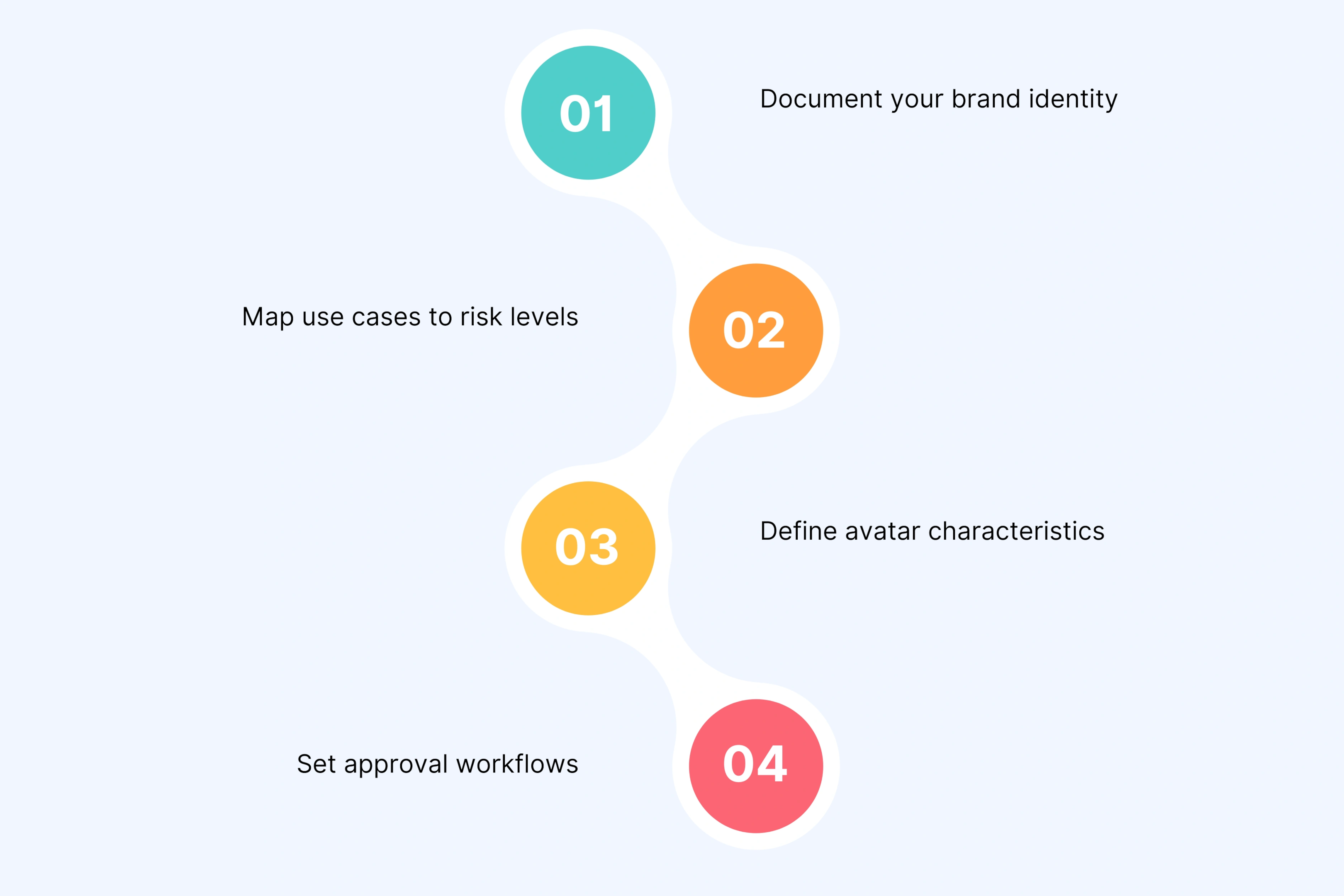
Step 1: Document your brand identity
Write down your visual style and tone. Even if it feels obvious. What colors represent your brand? What tone do you use in existing content? How formal or casual should your virtual presenter sound? These details guide every decision.
Step 2: Map use cases to risk levels
Not all video content carries the same risk. Internal training content allows more experimentation. Customer-facing ads and testimonials need tighter control. Decide which content types get faster approval and which need multiple reviews.
Step 3: Define avatar characteristics
Match your virtual presenter to your ideal customer profile. Age, ethnicity, gender, and presentation style all matter. A B2B software company targeting CTOs needs a different approach than a DTC brand selling to Gen Z. These choices affect realistic interactions with your audience.
Step 4: Set approval workflows
Decide who reviews scripts. Who checks the polished video before it goes live. When do stakeholders get involved. Clear workflows prevent bottlenecks and keep quality high.
Think beyond a single video. Your avatar should support your broader content strategy and marketing goals.
Ask these questions before you start:
Will this AI avatar be reused across multiple versions of content?
Does it work for different content types or just one use case?
Can it scale across multiple platforms without losing quality?
How long will this avatar represent your brand?
An avatar built for one video is a tool. An avatar built for scale is a brand asset. Plan accordingly.
Where Creative Oversight Matters Most (And Where Automation Is Safe)
Not all video content needs the same level of review. Some content types allow faster production. Others require careful human oversight at every stage.
Customer testimonials, brand storytelling, and ad creative all need tight creative control. These videos shape how people see your brand. One off-brand message can damage trust you spent years building.
Anything customer-facing deserves extra attention. Your audience notices tone shifts. They spot generic messaging. They can tell when a video feels rushed.
Lower-oversight zones:
Internal training modules and software tutorials carry less brand risk. Templated onboarding videos for new team members work well with streamlined workflows. These use cases benefit most from AI-powered production speed.
Why human review still matters:
Artificial intelligence handles production mechanics well. But it misses context. It cannot catch cultural nuances. It does not understand when messaging feels tone-deaf to a specific audience segment.
Complex messaging needs human eyes. New audience segments require cultural awareness. High-stakes campaigns with big media budgets cannot rely on automation alone.
The best AI avatar cannot fix a bad script. You can have perfect facial expressions, flawless synthetic media quality, and a lifelike digital twin. But if the script is off-brand, the video fails.
Script review protects your brand voice better than any avatar customization. A well-written script with consistent messaging beats a poorly written one with a premium avatar every time.
Technical Best Practices That Support Brand Safety
Technical quality directly affects brand perception. A polished video builds trust. A low-quality one destroys it.
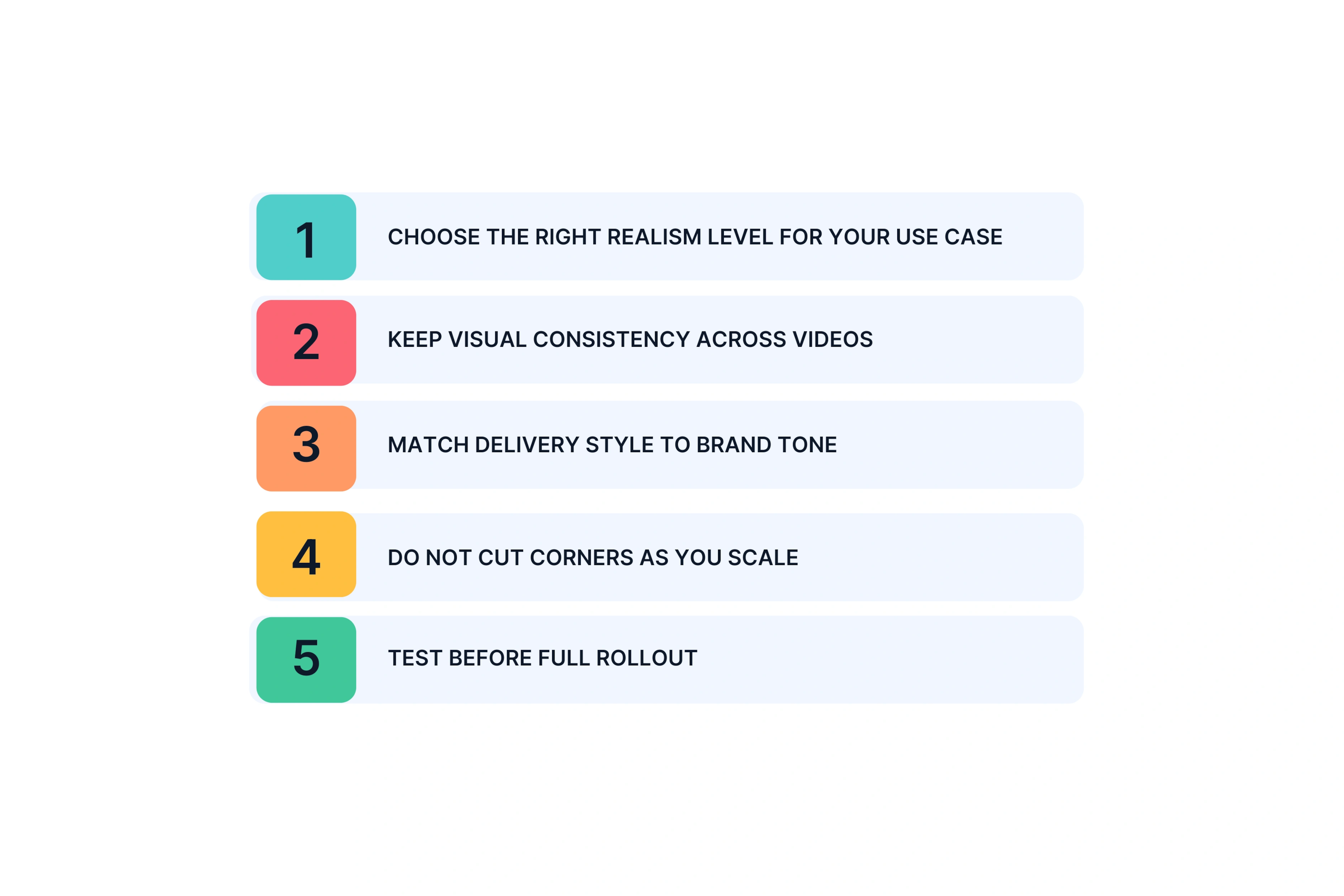
Choose the right realism level for your use case: Hyper-realistic avatars work for professional video content like sales team pitches. Stylized avatars fit better for casual social content or personal brands.
Keep visual consistency across videos: When you scale video production, maintain the same lighting, background, and framing. Inconsistent visuals confuse your audience and weaken brand recognition.
Match delivery style to brand tone: Pacing, facial expressions, and gestures must align with your marketing strategy. A fast-paced delivery works for energetic brands. Slower pacing fits thoughtful, technical content.
Do not cut corners as you scale: The temptation to rush increases when you create engaging content at volume. Resist it. High-quality video standards matter more than speed.
Test before full rollout: Show avatar videos to real audience segments first. Get feedback. Adjust. Then scale. This initial setup step prevents expensive mistakes across your existing library of content.
Good enough rarely works for brand-building content. Your audience expects professional video quality, not just functional output.
Across multiple studies, consumers say video quality and relevance are critical:87% link video quality to how much they trust a brand, and more than half say most of the digital ads they see feel irrelevant to them, two issues that AI workflows can either fix or amplify at scale.
How a Creative Partner Approach Changes Brand Safety Outcomes
Brand safety improves when AI is a production tool, not a replacement for creative judgment.
Using AI tools directly puts all decisions on your team. You pick avatars. You write scripts. You manage quality control. That works if you have time and expertise.
What strategic oversight actually looks like:
Custom avatar design based on your ideal customer profile
Brand guideline integration from day one
Script refinement to match your brand voice
Scenario planning for different content types
End-to-end production protects brand consistency better than self-service platforms. You get custom AI avatar video services that match your brand assets and tone. Reusable avatars built specifically for your campaigns. Product integration that feels natural, not generic.
The value is simple. A partner asks "Should we?" before "Can we?" They think about brand reputation first, production speed second.
This approach works because quality and scale are not opposites. They just require strategy before execution.
Frequently Asked Questions
Are AI avatars safe for customer-facing content, or should they only be used internally?
It depends on your use case and audience expectations. AI avatars work well for UGC-style social ads, product demos, and personalized video content. Be cautious with high-stakes brand storytelling or testimonials claiming to be real customers.
The key: transparency and quality. If it looks like a shortcut, your audience will notice.
How do I know if an AI avatar looks "brand-safe" or "cheap"?
Run two tests.
Competitor test: Would your competitor use this same avatar? If yes, skip it.
Audience test: Show it to 3-5 people in your target demographic. Do they trust it or cringe?
Red flags: uncanny valley effect, robotic delivery, stock avatars everyone recognizes.
Can I use the same AI avatar across different types of content?
You can, but different content types often need different approaches.
Best practice: Create 2-3 custom avatars. Use a professional visual presenter for LinkedIn ads. Use a casual one for TikTok content.
One avatar forced everywhere rarely works well.
What is the difference between stock avatars and custom avatars?
Stock avatars are pre-made and available to anyone. Your competitor might use the same one.
Custom avatars are designed for your brand based on your ideal customer profile and brand guidelines. They cost more upfront but protect brand consistency long-term.
How much creative control do I lose when using AI avatars?
You do not lose control. You shift where it applies.
You control: Script, messaging, brand voice, avatar design, approval workflows.
AI handles: Video production mechanics, animation, voice synthesis.
Treat AI as a production accelerator, not a replacement for marketing strategy.
Do AI avatar videos perform as well as real-person videos in marketing campaigns?
It depends on execution quality and use case. AI avatars work well for product demos, personalized videos at scale, and training content. Real-person videos still win for authentic testimonials and founder-led content. Quality matters more than format. A high-quality AI avatar video beats a poorly shot traditional production video.
What brand guidelines should I apply to AI avatar videos?
Apply the same guidelines you use for all video content. Visual guidelines, voice guidelines, content guidelines, and avatar-specific standards like appearance, delivery style, and when to use versus avoid. Without guidelines, avatar videos drift from your brand identity over time.
How long does it take to create a brand-safe AI avatar video?
What is fast: actual production once strategy is set.
Rushing skips review steps and hurts brand safety.
Can AI avatars speak multiple languages while maintaining brand consistency?
Yes. Same avatar, localized scripts, text-to-speech in multiple languages.
Key consideration: voice tone and delivery must match across languages, not just translation accuracy.
Best practice: work with native speakers to review localized versions for cultural adaptation.
What happens if my AI avatar video does not match my brand voice?
You risk audience confusion, diluted brand identity, and wasted production effort.
Prevention: Clear brand guidelines, script review, test with small audiences first.
Fix: Re-script and re-produce. Adjust tone. Add human voiceover if needed.
Brand voice protection requires human oversight at every stage.
What This Means for Teams Trying to Scale Video Content
AI avatars help you scale video content. But only if brand safety is built into the process from day one. You do not have to choose between speed and quality. You do have to plan for both.
The key takeaway: start with brand strategy, then add AI efficiency. Not the other way around.
If you are exploring AI avatar video and want to maintain brand integrity while scaling production, talk to partners who treat creative strategy and technology as equally important.
Book your strategy call now to explore how custom AI avatar video services protect your brand while delivering video at scale. The best AI avatar videos do not look like AI. They look like your brand.
Let's Turn Your Scripts into Stunning Videos. Sign Up Now.
Stop struggling with video creation. Our AI simplifies the process, letting you create professional-looking videos from text in record time. Try it for free today!
Brand-Safe AI Avatar Video: Best Practices for Protecting Your Brand While Scaling Content
Learn how to use AI avatars without damaging your brand. Practical best practices for creating brand-safe AI avatar videos that maintain trust and quality at scale.
AI avatars promise faster and cheaper video production. But speed means nothing if your audience does not trust the content. Or worse, if it damages your brand.
You need video content at scale. AI avatars seem like the perfect answer. The problem? Most teams skip the strategy and jump straight to production. That leads to generic avatars, off-brand messaging, and videos that look like shortcuts.
This guide shows you how to use AI avatar video without looking cheap or inauthentic. You will learn what to define before you start, where mistakes happen, and how to protect your brand while scaling content production.
Key Takeaways
Brand safety first: AI avatars work when you plan strategically with proper oversight, not when you rush to produce content quickly.
Biggest risks: Using stock avatars that competitors use, skipping brand guidelines, and choosing speed over consistency will hurt your brand.
Define upfront: Set your avatar strategy with visual identity, use cases, and approval workflows before production begins.
Oversight matters: Customer-facing content like ads and testimonials needs more creative review than internal training videos.
Production tools: AI avatars deliver results when treated as production tools within a brand-first creative process, not as replacements for strategy.
Custom wins: Custom avatars aligned with your target audience and brand identity outperform generic stock options every time.
Why Brand Safety Matters More Than Speed When Using AI Avatars
AI avatar tools sell you on speed. Create videos in minutes. Cut production costs by 80%. Scale content overnight.
But here is what they do not tell you. Your audience can spot a cheap AI video immediately. And when they do, they stop trusting your brand.
Speed matters. But trust matters more. Lose trust and you lose customers.
What "Brand-Safe" Actually Means in AI Avatar Video Production
Brand safety goes beyond legal compliance. It is not just about avoiding copyright issues or following regulations.
Real brand safety means your AI avatar videos match your brand identity, sound like your brand voice, and feel right to your target audience.
Three pillars of brand-safe AI video:
Visual consistency: Your avatar should match your brand's visual style and quality standards. The same look, the same polish, the same attention to detail you apply to all your marketing content.
Message integrity: The delivery must feel authentic to your brand voice. If your brand is casual and friendly, a stiff corporate avatar breaks trust. If you are professional and technical, an overly animated avatar feels wrong.
Audience fit: Your target audience decides if AI video works. Some audiences accept AI avatars in product demos and training videos. Others expect real people in testimonials and brand storytelling.
The Difference Between "AI-Generated" and "Brand-Aligned"
Most stock avatars fail brand safety tests. They are generic. Overused. No connection to your brand assets or brand guidelines.
You can create a technically functional AI video in minutes. The avatar moves. The voice sounds clear. The video plays without errors.
But functional does not mean brand-aligned.
A video that truly represents your brand requires more. Custom avatar design. Script review. Attention to facial expressions and visual style. Alignment with your brand's message and marketing strategy.
AI-generated is easy. Brand-aligned takes planning. One protects your brand. The other just fills a content calendar.
Common Brand Safety Mistakes Teams Make with AI Avatars
Marketing teams rush into AI video creation without a plan. The promise of videos quickly sounds too good to pass up. But speed without strategy leads to predictable mistakes.
Mistake #1: Using stock avatars everyone else uses
Your competitor runs the same digital person in their ads. Your differentiation disappears. Stock avatars kill brand identity before you even start.
Mistake #2: Skipping brand guidelines to move faster
You want content creation in just a few minutes. So you skip the brand voice check. You ignore visual guidelines. The final video looks professional but sounds nothing like your company culture.
Mistake #3: Letting AI generate scripts without review
AI-generated content needs human oversight. Without it, tone drifts. Messaging goes off-brand. Your talking head avatar delivers words that do not match your marketing strategy.
Mistake #4: Using one avatar for everything
Training modules need a different approach than sales videos. Onboarding videos feel different than global campaigns. One avatar across multiple platforms rarely works for all use cases.
Mistake #5: Ignoring cultural context
Avatar characteristics matter. Ethnicity, age, and presentation style affect how new customers and sales teams receive your message. Skipping this step hurts viewer engagement.
These mistakes happen because teams think tool-first instead of brand-first. They focus on artificial intelligence capabilities, not marketing goals.
What to Define Before Creating Your First AI Avatar Video
Most teams jump straight to production. They pick an avatar, record a pre-written script, and hope for the best. Then they realize the video does not fit their brand. They start over. That wastes time and budget.
Do this work upfront and you avoid costly re-work later.
Step 1: Document your brand identity
Write down your visual style and tone. Even if it feels obvious. What colors represent your brand? What tone do you use in existing content? How formal or casual should your virtual presenter sound? These details guide every decision.
Step 2: Map use cases to risk levels
Not all video content carries the same risk. Internal training content allows more experimentation. Customer-facing ads and testimonials need tighter control. Decide which content types get faster approval and which need multiple reviews.
Step 3: Define avatar characteristics
Match your virtual presenter to your ideal customer profile. Age, ethnicity, gender, and presentation style all matter. A B2B software company targeting CTOs needs a different approach than a DTC brand selling to Gen Z. These choices affect realistic interactions with your audience.
Step 4: Set approval workflows
Decide who reviews scripts. Who checks the polished video before it goes live. When do stakeholders get involved. Clear workflows prevent bottlenecks and keep quality high.
Think beyond a single video. Your avatar should support your broader content strategy and marketing goals.
Ask these questions before you start:
Will this AI avatar be reused across multiple versions of content?
Does it work for different content types or just one use case?
Can it scale across multiple platforms without losing quality?
How long will this avatar represent your brand?
An avatar built for one video is a tool. An avatar built for scale is a brand asset. Plan accordingly.
Where Creative Oversight Matters Most (And Where Automation Is Safe)
Not all video content needs the same level of review. Some content types allow faster production. Others require careful human oversight at every stage.
Customer testimonials, brand storytelling, and ad creative all need tight creative control. These videos shape how people see your brand. One off-brand message can damage trust you spent years building.
Anything customer-facing deserves extra attention. Your audience notices tone shifts. They spot generic messaging. They can tell when a video feels rushed.
Lower-oversight zones:
Internal training modules and software tutorials carry less brand risk. Templated onboarding videos for new team members work well with streamlined workflows. These use cases benefit most from AI-powered production speed.
Why human review still matters:
Artificial intelligence handles production mechanics well. But it misses context. It cannot catch cultural nuances. It does not understand when messaging feels tone-deaf to a specific audience segment.
Complex messaging needs human eyes. New audience segments require cultural awareness. High-stakes campaigns with big media budgets cannot rely on automation alone.
The best AI avatar cannot fix a bad script. You can have perfect facial expressions, flawless synthetic media quality, and a lifelike digital twin. But if the script is off-brand, the video fails.
Script review protects your brand voice better than any avatar customization. A well-written script with consistent messaging beats a poorly written one with a premium avatar every time.
Technical Best Practices That Support Brand Safety
Technical quality directly affects brand perception. A polished video builds trust. A low-quality one destroys it.
Choose the right realism level for your use case: Hyper-realistic avatars work for professional video content like sales team pitches. Stylized avatars fit better for casual social content or personal brands.
Keep visual consistency across videos: When you scale video production, maintain the same lighting, background, and framing. Inconsistent visuals confuse your audience and weaken brand recognition.
Match delivery style to brand tone: Pacing, facial expressions, and gestures must align with your marketing strategy. A fast-paced delivery works for energetic brands. Slower pacing fits thoughtful, technical content.
Do not cut corners as you scale: The temptation to rush increases when you create engaging content at volume. Resist it. High-quality video standards matter more than speed.
Test before full rollout: Show avatar videos to real audience segments first. Get feedback. Adjust. Then scale. This initial setup step prevents expensive mistakes across your existing library of content.
Good enough rarely works for brand-building content. Your audience expects professional video quality, not just functional output.
Across multiple studies, consumers say video quality and relevance are critical:87% link video quality to how much they trust a brand, and more than half say most of the digital ads they see feel irrelevant to them, two issues that AI workflows can either fix or amplify at scale.
How a Creative Partner Approach Changes Brand Safety Outcomes
Brand safety improves when AI is a production tool, not a replacement for creative judgment.
Using AI tools directly puts all decisions on your team. You pick avatars. You write scripts. You manage quality control. That works if you have time and expertise.
What strategic oversight actually looks like:
Custom avatar design based on your ideal customer profile
Brand guideline integration from day one
Script refinement to match your brand voice
Scenario planning for different content types
End-to-end production protects brand consistency better than self-service platforms. You get custom AI avatar video services that match your brand assets and tone. Reusable avatars built specifically for your campaigns. Product integration that feels natural, not generic.
The value is simple. A partner asks "Should we?" before "Can we?" They think about brand reputation first, production speed second.
This approach works because quality and scale are not opposites. They just require strategy before execution.
Frequently Asked Questions
Are AI avatars safe for customer-facing content, or should they only be used internally?
It depends on your use case and audience expectations. AI avatars work well for UGC-style social ads, product demos, and personalized video content. Be cautious with high-stakes brand storytelling or testimonials claiming to be real customers.
The key: transparency and quality. If it looks like a shortcut, your audience will notice.
How do I know if an AI avatar looks "brand-safe" or "cheap"?
Run two tests.
Competitor test: Would your competitor use this same avatar? If yes, skip it.
Audience test: Show it to 3-5 people in your target demographic. Do they trust it or cringe?
Red flags: uncanny valley effect, robotic delivery, stock avatars everyone recognizes.
Can I use the same AI avatar across different types of content?
You can, but different content types often need different approaches.
Best practice: Create 2-3 custom avatars. Use a professional visual presenter for LinkedIn ads. Use a casual one for TikTok content.
One avatar forced everywhere rarely works well.
What is the difference between stock avatars and custom avatars?
Stock avatars are pre-made and available to anyone. Your competitor might use the same one.
Custom avatars are designed for your brand based on your ideal customer profile and brand guidelines. They cost more upfront but protect brand consistency long-term.
How much creative control do I lose when using AI avatars?
You do not lose control. You shift where it applies.
You control: Script, messaging, brand voice, avatar design, approval workflows.
AI handles: Video production mechanics, animation, voice synthesis.
Treat AI as a production accelerator, not a replacement for marketing strategy.
Do AI avatar videos perform as well as real-person videos in marketing campaigns?
It depends on execution quality and use case. AI avatars work well for product demos, personalized videos at scale, and training content. Real-person videos still win for authentic testimonials and founder-led content. Quality matters more than format. A high-quality AI avatar video beats a poorly shot traditional production video.
What brand guidelines should I apply to AI avatar videos?
Apply the same guidelines you use for all video content. Visual guidelines, voice guidelines, content guidelines, and avatar-specific standards like appearance, delivery style, and when to use versus avoid. Without guidelines, avatar videos drift from your brand identity over time.
How long does it take to create a brand-safe AI avatar video?
What is fast: actual production once strategy is set.
Rushing skips review steps and hurts brand safety.
Can AI avatars speak multiple languages while maintaining brand consistency?
Yes. Same avatar, localized scripts, text-to-speech in multiple languages.
Key consideration: voice tone and delivery must match across languages, not just translation accuracy.
Best practice: work with native speakers to review localized versions for cultural adaptation.
What happens if my AI avatar video does not match my brand voice?
You risk audience confusion, diluted brand identity, and wasted production effort.
Prevention: Clear brand guidelines, script review, test with small audiences first.
Fix: Re-script and re-produce. Adjust tone. Add human voiceover if needed.
Brand voice protection requires human oversight at every stage.
What This Means for Teams Trying to Scale Video Content
AI avatars help you scale video content. But only if brand safety is built into the process from day one. You do not have to choose between speed and quality. You do have to plan for both.
The key takeaway: start with brand strategy, then add AI efficiency. Not the other way around.
If you are exploring AI avatar video and want to maintain brand integrity while scaling production, talk to partners who treat creative strategy and technology as equally important.
Book your strategy call now to explore how custom AI avatar video services protect your brand while delivering video at scale. The best AI avatar videos do not look like AI. They look like your brand.
We are committed to safety, security, and ethical use of our service. Al avatars can only be created and shared with express consent and cannot be used to spread content that's harmful to others.
December 23, 2025
How to Scale Video Ad Production Without the Traditional Bottlenecks
Learn how teams produce 20-30 video ad variations per campaign without massive budgets. Practical strategies for scaling video production that actually work.
Short-Form Video Ads: Why Most Fail in 7 Days (And How to Win)
Most short-form video ads lose 50% performance in 7 days. Learn the attention patterns, variation strategies, and platform tactics that sustain results.
How to Scale UGC Video Ads Without Losing Authenticity (or Your Budget)
UGC video ads drive conversions, but scaling them is expensive and slow. Learn how brands test multiple hooks, maintain authenticity, and reduce ad spend without creator dependency.
Avatar Marketing: Which One Do You Actually Need? (And How to Know)
Avatar marketing can mean digital AI characters OR customer profiling. Learn which one you need, when each works, and how to avoid costly mistakes in your strategy.
We are committed to safety, security, and ethical use of our service. Al avatars can only be created and shared with express consent and cannot be used to spread content that's harmful to others.
Data Encryption
Your data is encrypted both in transit and at rest, ensuring safe and confidential communications at all times.
Privacy Compliance
Our platform adheres to GDPR, CCPA, and SOC 2, safeguarding your data with strict security protocols.
Identity Verification
We use identity checks to ensure only authorized individuals access your account and data.
24/7 Monitoring
Our system continuously monitors for vulnerabilities, keeping your data safe from potential risks.







.svg)
.svg)
%201.svg)

.webp)
.webp)
.webp)


.svg)
