Short-Form Video Ads: Why Most Fail in 7 Days (And How to Win)
Most short-form video ads lose 50% performance in 7 days. Learn the attention patterns, variation strategies, and platform tactics that sustain results.
Your short-form video ad crushed it for three days. Then the cost per click doubled and your click rate tanked. You are back to square one wondering what went wrong.
Here is the truth. Most video ads lose half their performance within the first week. The problem is not bad creative. The problem is that your strategy ignored creative fatigue.
This guide shows you why short-form video ads fail and how to build a variation strategy that keeps your campaigns working. You will learn what works in the first three seconds, how to fight creative fatigue, and what it takes to produce enough video content to win on Instagram Reels, TikTok, and YouTube Shorts.
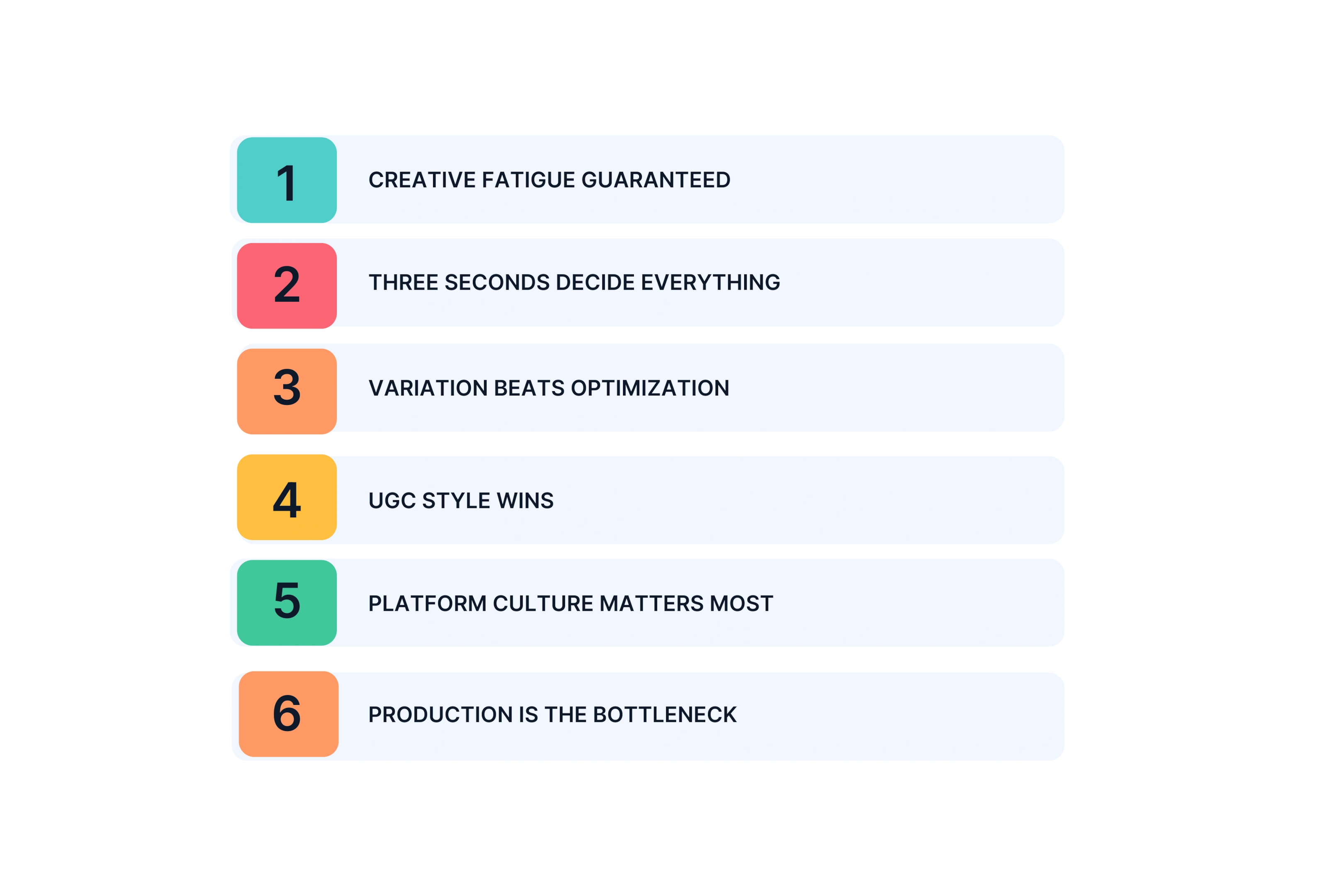
You need fresh creative weekly just to maintain results
Most campaigns die because they run out of creative, not because the ads were bad
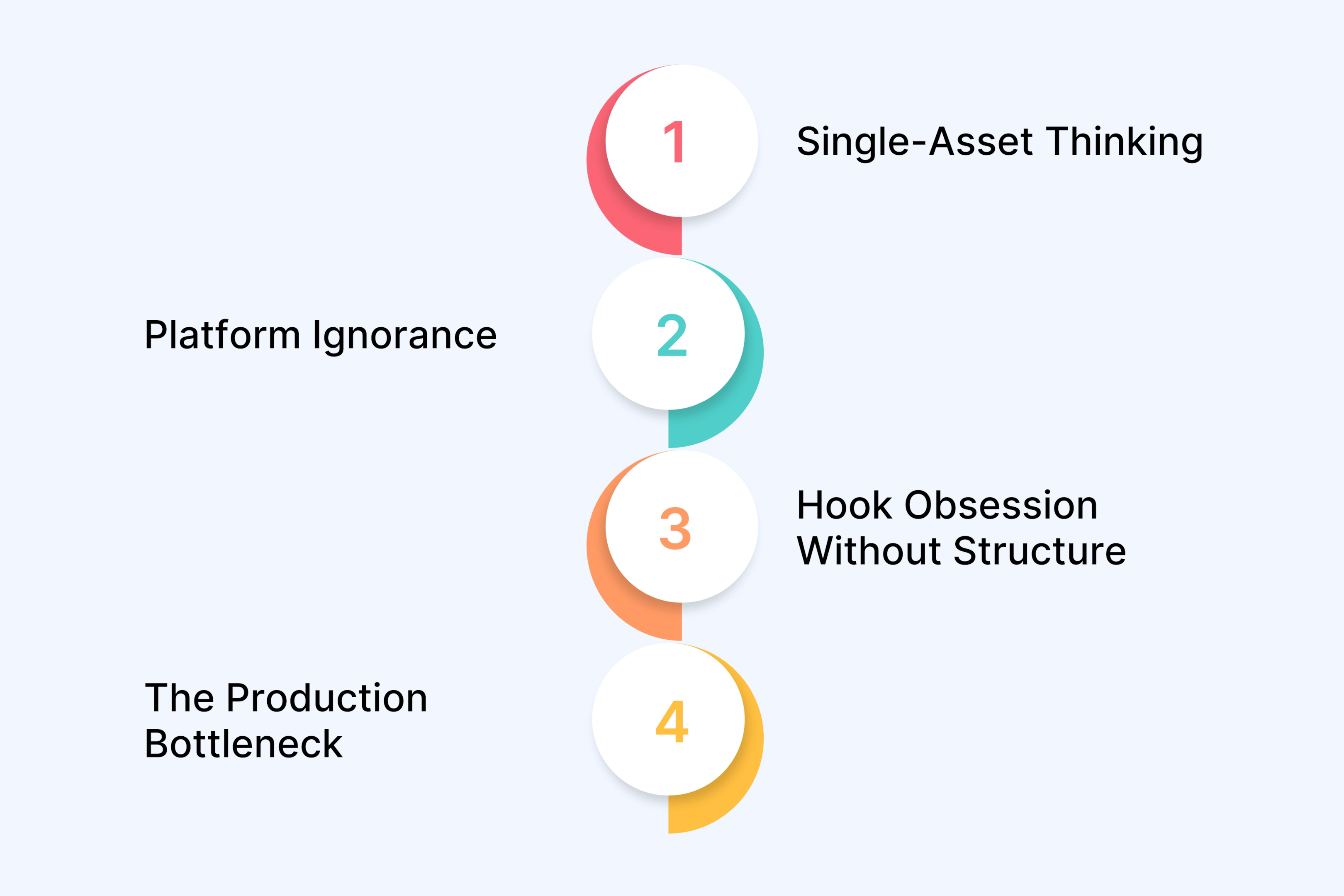
Platform Ignorance
You cannot post the same vertical videos across Instagram Reels, TikTok, and YouTube Shorts and expect equal results.
Each platform has different culture and audience expectations. What works on TikTok fails on Instagram. Raw and authentic wins on TikTok. Polished but relatable wins on Instagram Reels.
Reformatting is not platform optimization. It is lazy distribution. Your content needs to match the platform culture or your audience will scroll right past it.
Hook Obsession Without Structure
Everyone talks about grabbing attention in the first three seconds. That advice is only half right.
A strong hook gets viewers to stop scrolling. But if you lose them at second five, you wasted that impression. The missing piece is seconds four through 27. Those seconds need to maintain viewer interest and deliver your core message.
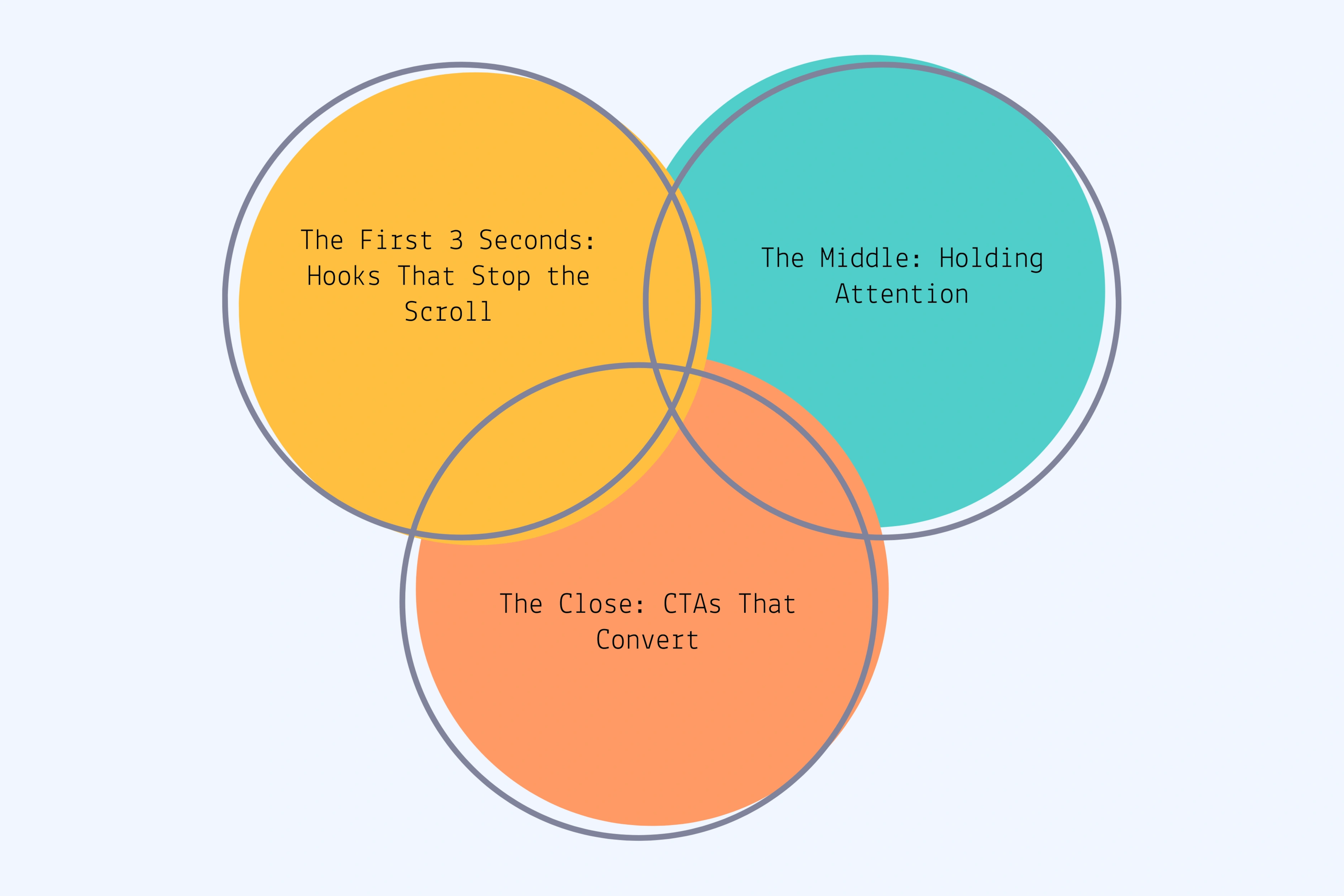
Structure matters as much as creativity:
Your hook stops the scroll
Your middle section holds attention
Your close drives action
Skip any part and your video ad fails.
The Production Bottleneck
Your winning strategy needs 10 to 15 video variations each month. Most in-house teams produce two to four videos monthly if they are lucky.
Traditional agencies take two to three weeks per video. That timeline does not work when you need to rotate creative every week.
This gap between knowing what to do and being able to execute kills most campaigns. You understand the strategy. You just cannot produce video content fast enough to make it work.
Understanding why ads fail is not enough. You need to know what actually works. Start with the structure present in every high-performing short-form video ad.
The Anatomy of High-Performing Short-Form Video Ads
Every high-performing short form video follows a three-part structure. Master these parts and your video marketing will see better results.
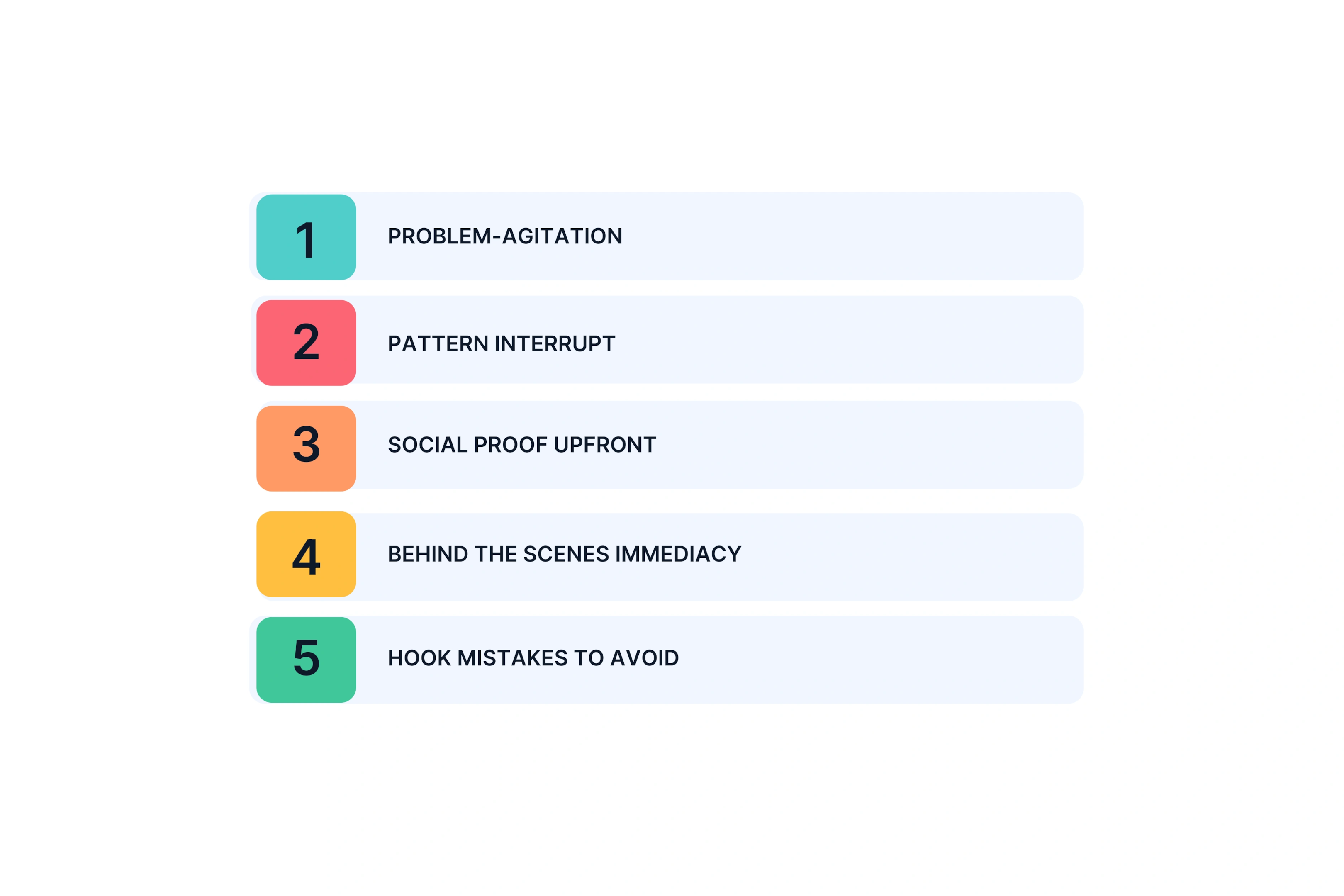
Problem-agitation: Open with a pain point your target audience feels right now. "Still wasting two thousand dollars a month on ads that don't convert?" This works because it triggers immediate relevance. Best for Instagram Reels and Facebook.
Pattern interrupt: Use a visual surprise or contrarian statement that breaks scroll behavior. This works on TikTok and Instagram Reels where the younger generation seeks novelty.
Social proof upfront: Lead with results or credibility. "We tested 47 variations. Here is what actually worked." This builds trust fast. YouTube Shorts audiences expect valuable insights.
Behind the scenes immediacy: Drop viewers into the middle of action. "Here is what happened when we..." This creates authenticity. TikTok and Instagram Stories audiences love this approach.
Hook mistakes to avoid: Leading with your brand logo loses 40 percent of viewers. Slow buildups work for long form videos, not short videos. Generic openings like "hey guys" get scrolled past.
The Middle: Holding Attention
You stopped the scroll. Now you need to maintain viewer interest while delivering your core message.
Change your shot or angle every two to three seconds. Dynamic visuals keep eyes engaged. Layer your content with visuals, audio, and background music. Present your product at the eight to 12 second mark after you establish context.
Add text overlays. 70 percent of people watch without sound. Every three seconds should deliver new information. Fluff kills performance in short form content. Multiple platform studies have found that a large share of users consume social video with sound off, which is why captions and on‑screen text dramatically improve completion rates and comprehension.
Your pacing should follow hook, build, payoff tease. Not beginning, middle, end.
The Close: CTAs That Convert
You need conversions but hard selling destroys engagement metrics and algorithm distribution.
Match your CTA to the platform. TikTok needs soft CTAs like comment prompts. Instagram Reels works with link in bio and save this. YouTube Shorts tolerates direct CTAs better. Facebook audiences respond to direct calls to action.
Deliver complete value in your engaging video content first. Your CTA should feel like "want more?" not "buy now." This builds brand trust and keeps completion rates high.
Structure gets you in the game. But the biggest performance killer is not bad structure. It is creative fatigue.
The Creative Fatigue Problem (And the Variation Strategy That Solves It)
Your best short form video will stop working. This is not a maybe. This is guaranteed.
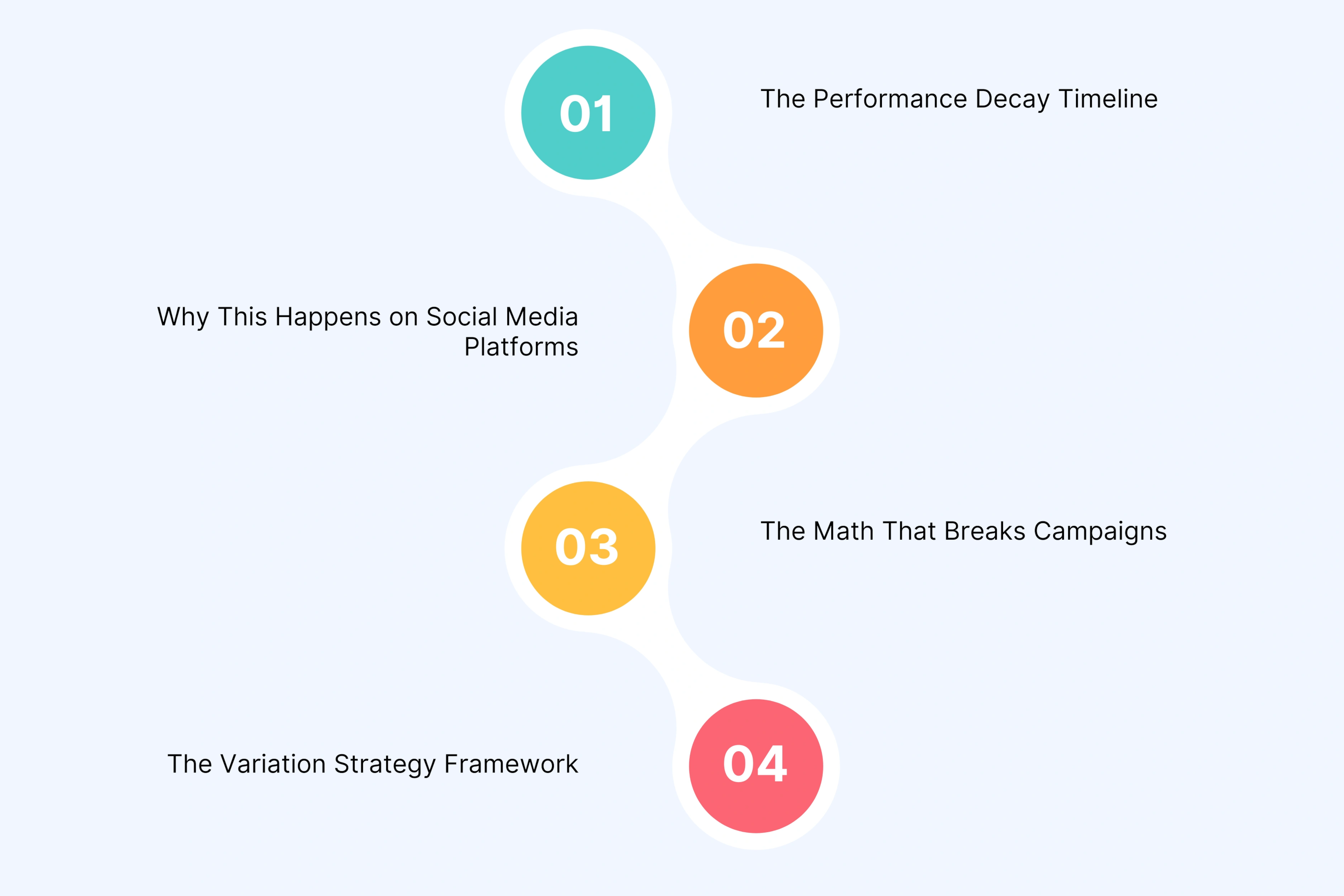
The Performance Decay Timeline
Days one to three show strong performance. The algorithm tests your ad. Your audience sees something new.
Days eight to 14 show a 60 to 80 percent decline from peak performance. By day 15, your audience is saturated. Returns diminish to almost nothing.
Why This Happens on Social Media Platforms
The algorithm shows your ad to the same people repeatedly. Frequency builds. Users develop banner blindness to your creative. Your audience sees 100 ads daily. Your ad becomes just another thing to scroll past.
Social media platforms favor fresh content over proven content. Even your winning ad loses algorithm support after a few days.
The Math That Breaks Campaigns
A 30 day campaign needs at least four creative rotations. You actually need six to eight variations to account for underperformers.
Most teams produce one or two ads per campaign. Result: guaranteed performance collapse by week two.
Warning signs of creative fatigue:
Engagement metrics decline while targeting stays the same
Cost per thousand impressions increases 20 percent or more week over week
You cannot optimize your way out of creative staleness. Adjusting your budget does not refresh tired creative. The ad itself must change.
Your production requirements:
Minimum: eight to 12 new video ads monthly
Competitive: 15 to 20 variations monthly
Elite: 20 plus variations across multiple concepts
Most in-house teams produce two to four videos per month. Traditional agencies deliver four to six videos monthly. Your short form video strategy needs 12 to 20 new videos each month. This gap is why most video marketing strategies fail at execution.
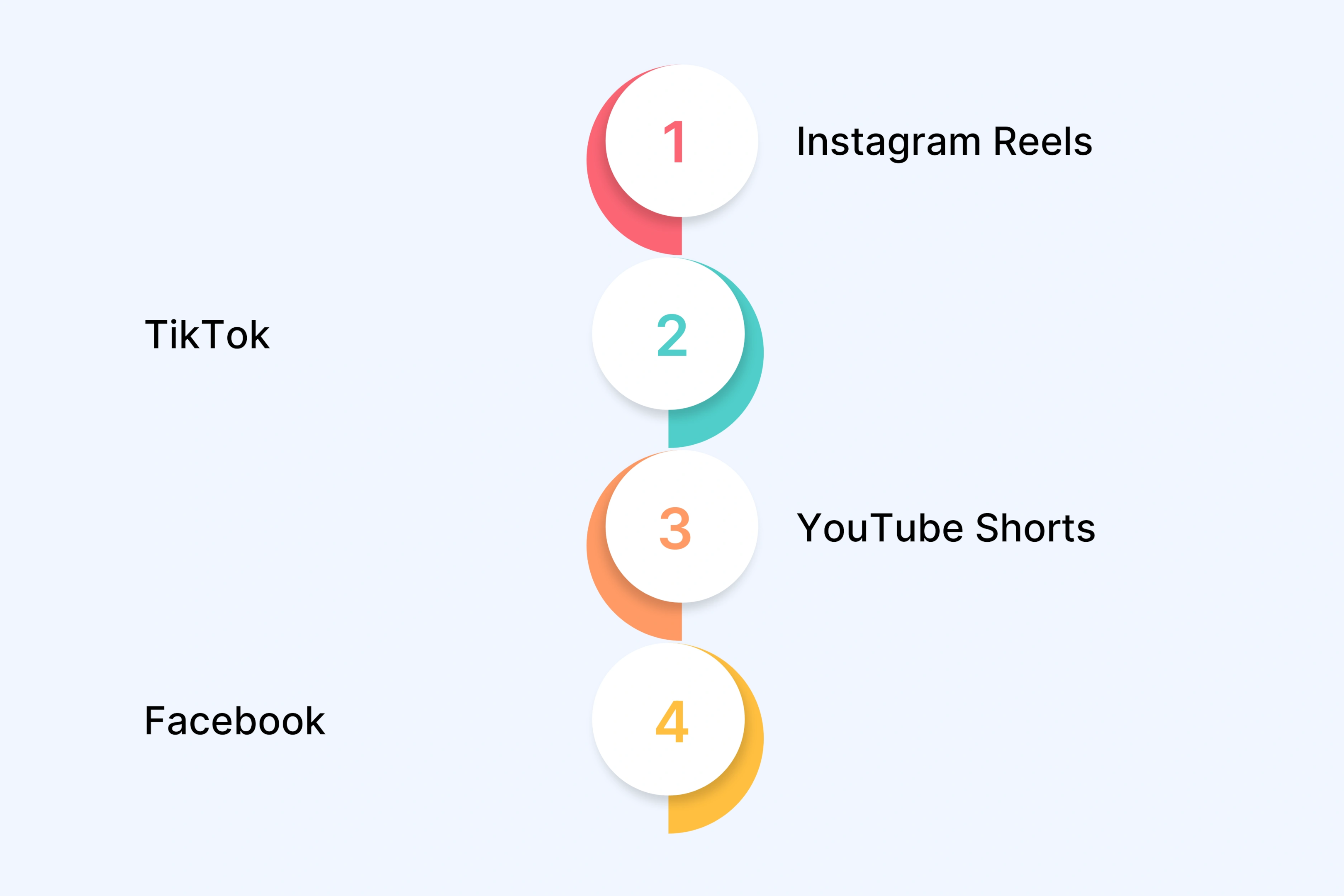
Platform Strategies: What Actually Works Where
Each short form video platform has different rules. What works on TikTok fails on Instagram Reels. Your marketing strategy needs platform specific content.
Instagram Reels: The Brand-Safe Testing Ground
Instagram Reels wants polished but relatable content. User generated content style with product integration performs best. Educational how-tos and behind the scenes content work well.
Keep your videos 15 to 30 seconds. Use vertical format. Add text overlays because 70 percent watch muted. Instagram and Facebook studies show short‑form placements like Reels and Stories have strong engagement for sub‑15‑second clips, but many users scroll with sound off, making on‑screen text essential.
Your call to action should say link in bio. Add engagement prompts like save this or share with a friend. Soft sell beats hard sell three to one.
Post four to five Reels weekly. Rotate your hooks every five to seven days. Test a mix of educational, entertaining, and inspirational short form video content.
TikTok: Where Authentic Beats Polished
TikTok audiences want raw and authentic content. Overly polished videos scream this is an ad. Your content should feel conversational, not scripted.
Leading with your brand logo kills performance. Corporate tone kills performance. Join trending sounds and effects. Adapt them to your product.
Keep videos 21 to 34 seconds. Change your visual every one to two seconds. Use engagement calls to action only. Comment, stitch, and duet prompts work. Direct selling tanks your reach.
Create TikTok first content. Do not repurpose from other platforms. Participate in trends weekly. Rotate creative every three to four days.
YouTube Shorts: The Extended Format Play
YouTube Shorts tolerates longer content. You can go 30 to 60 seconds. Audiences expect valuable insights here.
Explainer videos work well. Product demos with educational angles perform. Use Shorts to tease your long form content.
Direct calls to action work better here than other short form video platforms. Subscribe prompts are effective. Add links in your description.
Facebook: The Direct Response Channel
Facebook audiences are 35 plus. They respond to direct offers and promotions. Problem solution format beats entertaining content.
Stories should be 15 seconds. Feed videos can run 30 to 60 seconds. Direct calls to action like Shop Now and Get Offer outperform soft language.
Platform tactics mean nothing if you cannot produce content fast enough.
How to Scale Production (Without Sacrificing Quality)
Your short form video strategy needs 12 to 20 new videos each month. Most teams produce two to four videos monthly.
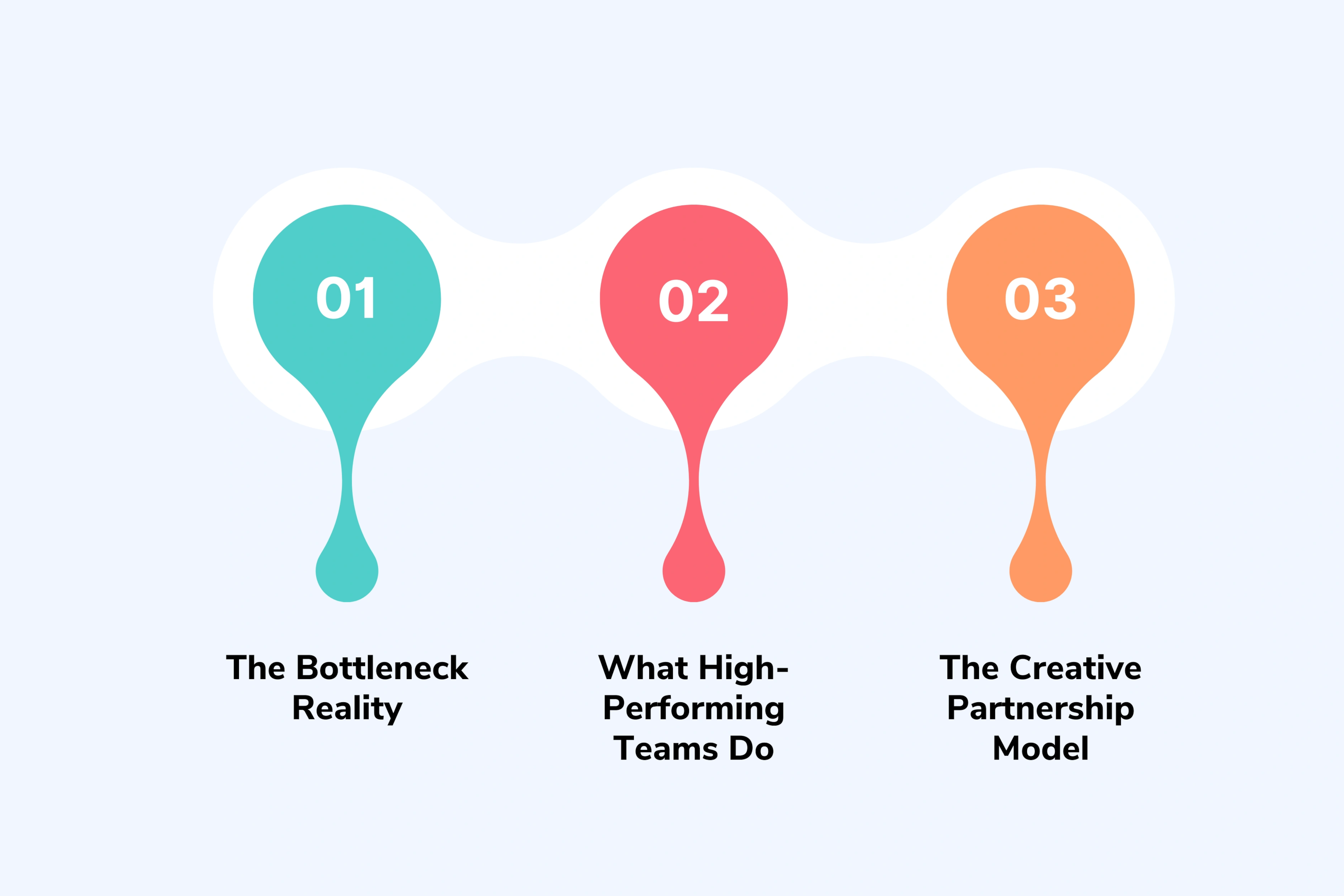
The Bottleneck Reality
In-house teams face resource constraints and competing priorities. Freelancers bring inconsistent quality and management overhead. Traditional agencies deliver four to eight videos monthly with two to three week turnarounds at 500 to 1,500 dollars per video.
High-performing teams treat video content as a system, not individual projects. They build variation into planning from day one. They separate strategy from production execution.
Your internal team handles briefs, target audience insights, and performance analysis. A creative partner handles production velocity.
The Creative Partnership Model
A creative partner receives your briefs, pain points, brand voice guidelines, and product assets. They deliver strategic recommendations, scripts, and complete video production with multiple variations.
Turnaround is days, not weeks. Production velocity reaches 10 to 20 plus videos monthly. You get variation-first planning, fixed monthly costs, and continuous collaboration.
This makes sense when you need eight plus new short form video ads monthly, experience creative fatigue, have strong strategy but lack production capacity, or run paid campaigns across multiple social media platforms.
By month two, most teams realize production capacity limits results more than strategy does.
What This Means for Your Team
Short form video is the primary content format for the younger generation and all demographics. Social media platforms favor short videos over long form content algorithmically.
Brands that master variation at scale win. Brands stuck in single asset thinking lose.
Success requires accepting creative fatigue as inevitable, understanding production is your constraint, matching platform to audience, and committing to eight to 12 plus videos monthly minimum.
Audit your current creative capacity. Calculate your variation needs. Identify the gap between required and actual capacity.
The brands winning with short form video content are not the most creative. They are the most systematic. They treat video content creation as an operational discipline.
Ready to scale your video production? Schedule your strategy call now to explore how Unscript can help you produce high quality video content at the velocity your campaigns demand.
FAQs
What is the ideal length for short form video ads?
Keep it as short as possible while delivering complete value. Instagram Reels and TikTok perform best at 21 to 30 seconds. YouTube Shorts can go 45 to 60 seconds. Facebook Stories work at 15 seconds. But retention beats length. A 45 second video with 80 percent watch rate outperforms a 15 second video at 40 percent completion. The first three seconds determine 85 percent of your success.
How do I prevent creative fatigue in my video ads?
You cannot prevent it. Plan for it. Even top performers lose 40 to 60 percent performance after five to seven days. Produce five to seven variations per concept before launch with different hooks, pain points, and visual styles. Rotate creative every five to seven days. Watch for warning signals like cost per thousand impressions up 20 percent or click through rate down 30 percent. You need eight to 12 plus new videos monthly minimum.
Should I use UGC style or polished brand videos?
UGC style wins with three to four times better engagement metrics than polished brand storytelling. User generated content feels authentic, lowers ad resistance, and feels native to platforms. TikTok heavily favors authentic content. Polished videos hurt performance there. Instagram Reels and YouTube Shorts offer more flexibility. Test both but expect UGC style to outperform.
Which platform should I start with?
Your target audience decides this. Instagram Reels works for millennials and younger generation ages 25 to 45. TikTok works for Gen Z ages 18 to 35. YouTube Shorts works for educational content and valuable insights. Facebook works for 35 plus demographic and direct offers. Master one platform first for two to three months. Then expand. Multi platform from day one spreads your resources too thin.
How much should short form video production cost?
DIY in house costs one thousand to four thousand dollars monthly. Freelancers cost 200 to 500 dollars per video. Traditional agencies charge 500 to two thousand dollars per video or five thousand to 15 thousand dollars monthly retainers. Creative partnership models cost three thousand to eight thousand dollars monthly for 10 to 20 plus videos with strategy included. You need 12 plus videos monthly minimum to combat creative fatigue.
Let's Turn Your Scripts into Stunning Videos. Sign Up Now.
Stop struggling with video creation. Our AI simplifies the process, letting you create professional-looking videos from text in record time. Try it for free today!
Short-Form Video Ads: Why Most Fail in 7 Days (And How to Win)
Most short-form video ads lose 50% performance in 7 days. Learn the attention patterns, variation strategies, and platform tactics that sustain results.
Your short-form video ad crushed it for three days. Then the cost per click doubled and your click rate tanked. You are back to square one wondering what went wrong.
Here is the truth. Most video ads lose half their performance within the first week. The problem is not bad creative. The problem is that your strategy ignored creative fatigue.
This guide shows you why short-form video ads fail and how to build a variation strategy that keeps your campaigns working. You will learn what works in the first three seconds, how to fight creative fatigue, and what it takes to produce enough video content to win on Instagram Reels, TikTok, and YouTube Shorts.
You need fresh creative weekly just to maintain results
Most campaigns die because they run out of creative, not because the ads were bad
Platform Ignorance
You cannot post the same vertical videos across Instagram Reels, TikTok, and YouTube Shorts and expect equal results.
Each platform has different culture and audience expectations. What works on TikTok fails on Instagram. Raw and authentic wins on TikTok. Polished but relatable wins on Instagram Reels.
Reformatting is not platform optimization. It is lazy distribution. Your content needs to match the platform culture or your audience will scroll right past it.
Hook Obsession Without Structure
Everyone talks about grabbing attention in the first three seconds. That advice is only half right.
A strong hook gets viewers to stop scrolling. But if you lose them at second five, you wasted that impression. The missing piece is seconds four through 27. Those seconds need to maintain viewer interest and deliver your core message.
Structure matters as much as creativity:
Your hook stops the scroll
Your middle section holds attention
Your close drives action
Skip any part and your video ad fails.
The Production Bottleneck
Your winning strategy needs 10 to 15 video variations each month. Most in-house teams produce two to four videos monthly if they are lucky.
Traditional agencies take two to three weeks per video. That timeline does not work when you need to rotate creative every week.
This gap between knowing what to do and being able to execute kills most campaigns. You understand the strategy. You just cannot produce video content fast enough to make it work.
Understanding why ads fail is not enough. You need to know what actually works. Start with the structure present in every high-performing short-form video ad.
The Anatomy of High-Performing Short-Form Video Ads
Every high-performing short form video follows a three-part structure. Master these parts and your video marketing will see better results.
Problem-agitation: Open with a pain point your target audience feels right now. "Still wasting two thousand dollars a month on ads that don't convert?" This works because it triggers immediate relevance. Best for Instagram Reels and Facebook.
Pattern interrupt: Use a visual surprise or contrarian statement that breaks scroll behavior. This works on TikTok and Instagram Reels where the younger generation seeks novelty.
Social proof upfront: Lead with results or credibility. "We tested 47 variations. Here is what actually worked." This builds trust fast. YouTube Shorts audiences expect valuable insights.
Behind the scenes immediacy: Drop viewers into the middle of action. "Here is what happened when we..." This creates authenticity. TikTok and Instagram Stories audiences love this approach.
Hook mistakes to avoid: Leading with your brand logo loses 40 percent of viewers. Slow buildups work for long form videos, not short videos. Generic openings like "hey guys" get scrolled past.
The Middle: Holding Attention
You stopped the scroll. Now you need to maintain viewer interest while delivering your core message.
Change your shot or angle every two to three seconds. Dynamic visuals keep eyes engaged. Layer your content with visuals, audio, and background music. Present your product at the eight to 12 second mark after you establish context.
Add text overlays. 70 percent of people watch without sound. Every three seconds should deliver new information. Fluff kills performance in short form content. Multiple platform studies have found that a large share of users consume social video with sound off, which is why captions and on‑screen text dramatically improve completion rates and comprehension.
Your pacing should follow hook, build, payoff tease. Not beginning, middle, end.
The Close: CTAs That Convert
You need conversions but hard selling destroys engagement metrics and algorithm distribution.
Match your CTA to the platform. TikTok needs soft CTAs like comment prompts. Instagram Reels works with link in bio and save this. YouTube Shorts tolerates direct CTAs better. Facebook audiences respond to direct calls to action.
Deliver complete value in your engaging video content first. Your CTA should feel like "want more?" not "buy now." This builds brand trust and keeps completion rates high.
Structure gets you in the game. But the biggest performance killer is not bad structure. It is creative fatigue.
The Creative Fatigue Problem (And the Variation Strategy That Solves It)
Your best short form video will stop working. This is not a maybe. This is guaranteed.
The Performance Decay Timeline
Days one to three show strong performance. The algorithm tests your ad. Your audience sees something new.
Days eight to 14 show a 60 to 80 percent decline from peak performance. By day 15, your audience is saturated. Returns diminish to almost nothing.
Why This Happens on Social Media Platforms
The algorithm shows your ad to the same people repeatedly. Frequency builds. Users develop banner blindness to your creative. Your audience sees 100 ads daily. Your ad becomes just another thing to scroll past.
Social media platforms favor fresh content over proven content. Even your winning ad loses algorithm support after a few days.
The Math That Breaks Campaigns
A 30 day campaign needs at least four creative rotations. You actually need six to eight variations to account for underperformers.
Most teams produce one or two ads per campaign. Result: guaranteed performance collapse by week two.
Warning signs of creative fatigue:
Engagement metrics decline while targeting stays the same
Cost per thousand impressions increases 20 percent or more week over week
You cannot optimize your way out of creative staleness. Adjusting your budget does not refresh tired creative. The ad itself must change.
Your production requirements:
Minimum: eight to 12 new video ads monthly
Competitive: 15 to 20 variations monthly
Elite: 20 plus variations across multiple concepts
Most in-house teams produce two to four videos per month. Traditional agencies deliver four to six videos monthly. Your short form video strategy needs 12 to 20 new videos each month. This gap is why most video marketing strategies fail at execution.
Platform Strategies: What Actually Works Where
Each short form video platform has different rules. What works on TikTok fails on Instagram Reels. Your marketing strategy needs platform specific content.
Instagram Reels: The Brand-Safe Testing Ground
Instagram Reels wants polished but relatable content. User generated content style with product integration performs best. Educational how-tos and behind the scenes content work well.
Keep your videos 15 to 30 seconds. Use vertical format. Add text overlays because 70 percent watch muted. Instagram and Facebook studies show short‑form placements like Reels and Stories have strong engagement for sub‑15‑second clips, but many users scroll with sound off, making on‑screen text essential.
Your call to action should say link in bio. Add engagement prompts like save this or share with a friend. Soft sell beats hard sell three to one.
Post four to five Reels weekly. Rotate your hooks every five to seven days. Test a mix of educational, entertaining, and inspirational short form video content.
TikTok: Where Authentic Beats Polished
TikTok audiences want raw and authentic content. Overly polished videos scream this is an ad. Your content should feel conversational, not scripted.
Leading with your brand logo kills performance. Corporate tone kills performance. Join trending sounds and effects. Adapt them to your product.
Keep videos 21 to 34 seconds. Change your visual every one to two seconds. Use engagement calls to action only. Comment, stitch, and duet prompts work. Direct selling tanks your reach.
Create TikTok first content. Do not repurpose from other platforms. Participate in trends weekly. Rotate creative every three to four days.
YouTube Shorts: The Extended Format Play
YouTube Shorts tolerates longer content. You can go 30 to 60 seconds. Audiences expect valuable insights here.
Explainer videos work well. Product demos with educational angles perform. Use Shorts to tease your long form content.
Direct calls to action work better here than other short form video platforms. Subscribe prompts are effective. Add links in your description.
Facebook: The Direct Response Channel
Facebook audiences are 35 plus. They respond to direct offers and promotions. Problem solution format beats entertaining content.
Stories should be 15 seconds. Feed videos can run 30 to 60 seconds. Direct calls to action like Shop Now and Get Offer outperform soft language.
Platform tactics mean nothing if you cannot produce content fast enough.
How to Scale Production (Without Sacrificing Quality)
Your short form video strategy needs 12 to 20 new videos each month. Most teams produce two to four videos monthly.
The Bottleneck Reality
In-house teams face resource constraints and competing priorities. Freelancers bring inconsistent quality and management overhead. Traditional agencies deliver four to eight videos monthly with two to three week turnarounds at 500 to 1,500 dollars per video.
High-performing teams treat video content as a system, not individual projects. They build variation into planning from day one. They separate strategy from production execution.
Your internal team handles briefs, target audience insights, and performance analysis. A creative partner handles production velocity.
The Creative Partnership Model
A creative partner receives your briefs, pain points, brand voice guidelines, and product assets. They deliver strategic recommendations, scripts, and complete video production with multiple variations.
Turnaround is days, not weeks. Production velocity reaches 10 to 20 plus videos monthly. You get variation-first planning, fixed monthly costs, and continuous collaboration.
This makes sense when you need eight plus new short form video ads monthly, experience creative fatigue, have strong strategy but lack production capacity, or run paid campaigns across multiple social media platforms.
By month two, most teams realize production capacity limits results more than strategy does.
What This Means for Your Team
Short form video is the primary content format for the younger generation and all demographics. Social media platforms favor short videos over long form content algorithmically.
Brands that master variation at scale win. Brands stuck in single asset thinking lose.
Success requires accepting creative fatigue as inevitable, understanding production is your constraint, matching platform to audience, and committing to eight to 12 plus videos monthly minimum.
Audit your current creative capacity. Calculate your variation needs. Identify the gap between required and actual capacity.
The brands winning with short form video content are not the most creative. They are the most systematic. They treat video content creation as an operational discipline.
Ready to scale your video production? Schedule your strategy call now to explore how Unscript can help you produce high quality video content at the velocity your campaigns demand.
FAQs
What is the ideal length for short form video ads?
Keep it as short as possible while delivering complete value. Instagram Reels and TikTok perform best at 21 to 30 seconds. YouTube Shorts can go 45 to 60 seconds. Facebook Stories work at 15 seconds. But retention beats length. A 45 second video with 80 percent watch rate outperforms a 15 second video at 40 percent completion. The first three seconds determine 85 percent of your success.
How do I prevent creative fatigue in my video ads?
You cannot prevent it. Plan for it. Even top performers lose 40 to 60 percent performance after five to seven days. Produce five to seven variations per concept before launch with different hooks, pain points, and visual styles. Rotate creative every five to seven days. Watch for warning signals like cost per thousand impressions up 20 percent or click through rate down 30 percent. You need eight to 12 plus new videos monthly minimum.
Should I use UGC style or polished brand videos?
UGC style wins with three to four times better engagement metrics than polished brand storytelling. User generated content feels authentic, lowers ad resistance, and feels native to platforms. TikTok heavily favors authentic content. Polished videos hurt performance there. Instagram Reels and YouTube Shorts offer more flexibility. Test both but expect UGC style to outperform.
Which platform should I start with?
Your target audience decides this. Instagram Reels works for millennials and younger generation ages 25 to 45. TikTok works for Gen Z ages 18 to 35. YouTube Shorts works for educational content and valuable insights. Facebook works for 35 plus demographic and direct offers. Master one platform first for two to three months. Then expand. Multi platform from day one spreads your resources too thin.
How much should short form video production cost?
DIY in house costs one thousand to four thousand dollars monthly. Freelancers cost 200 to 500 dollars per video. Traditional agencies charge 500 to two thousand dollars per video or five thousand to 15 thousand dollars monthly retainers. Creative partnership models cost three thousand to eight thousand dollars monthly for 10 to 20 plus videos with strategy included. You need 12 plus videos monthly minimum to combat creative fatigue.
We are committed to safety, security, and ethical use of our service. Al avatars can only be created and shared with express consent and cannot be used to spread content that's harmful to others.
December 23, 2025
How to Scale Video Ad Production Without the Traditional Bottlenecks
Learn how teams produce 20-30 video ad variations per campaign without massive budgets. Practical strategies for scaling video production that actually work.
Short-Form Video Ads: Why Most Fail in 7 Days (And How to Win)
Most short-form video ads lose 50% performance in 7 days. Learn the attention patterns, variation strategies, and platform tactics that sustain results.
How to Scale UGC Video Ads Without Losing Authenticity (or Your Budget)
UGC video ads drive conversions, but scaling them is expensive and slow. Learn how brands test multiple hooks, maintain authenticity, and reduce ad spend without creator dependency.
Avatar Marketing: Which One Do You Actually Need? (And How to Know)
Avatar marketing can mean digital AI characters OR customer profiling. Learn which one you need, when each works, and how to avoid costly mistakes in your strategy.
We are committed to safety, security, and ethical use of our service. Al avatars can only be created and shared with express consent and cannot be used to spread content that's harmful to others.
Data Encryption
Your data is encrypted both in transit and at rest, ensuring safe and confidential communications at all times.
Privacy Compliance
Our platform adheres to GDPR, CCPA, and SOC 2, safeguarding your data with strict security protocols.
Identity Verification
We use identity checks to ensure only authorized individuals access your account and data.
24/7 Monitoring
Our system continuously monitors for vulnerabilities, keeping your data safe from potential risks.

.webp)





.svg)
.svg)
%201.svg)

.webp)
.webp)


.svg)
